CityNest New York · Selected work
CityNest,
from the inside out.
A hotel is a brand, a guest journey and hundreds of daily decisions. The work is making them operate as one.
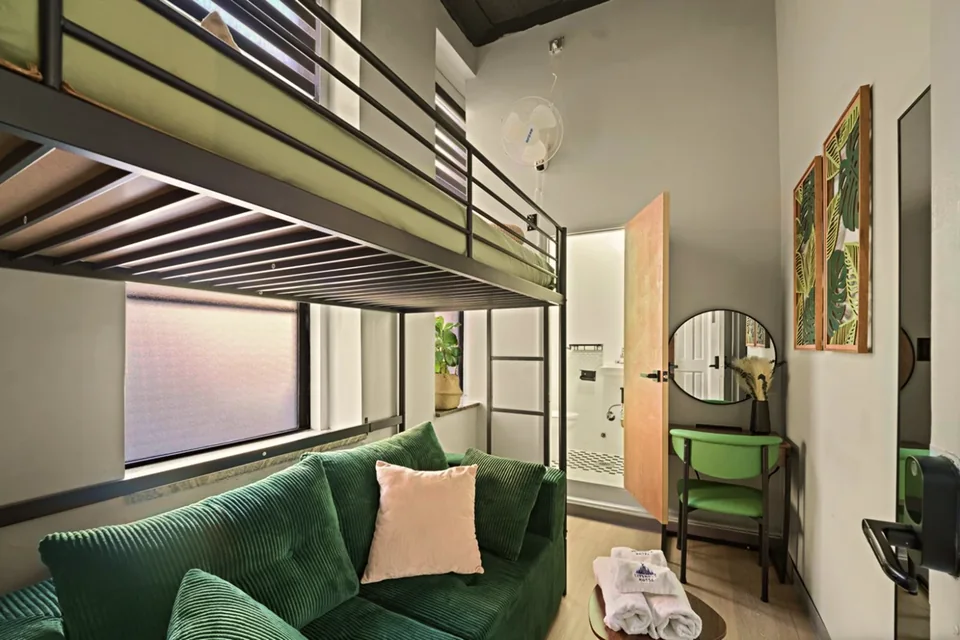
The work behind
the working hotel.
General Manager
May 2025 — Present
125 Bowery
Lower Manhattan, New York
Brand · Digital · Systems
Operations · People
Make a different hotel easy to understand.
A compact room works when the guest knows exactly what they are choosing — and the team can deliver it consistently.
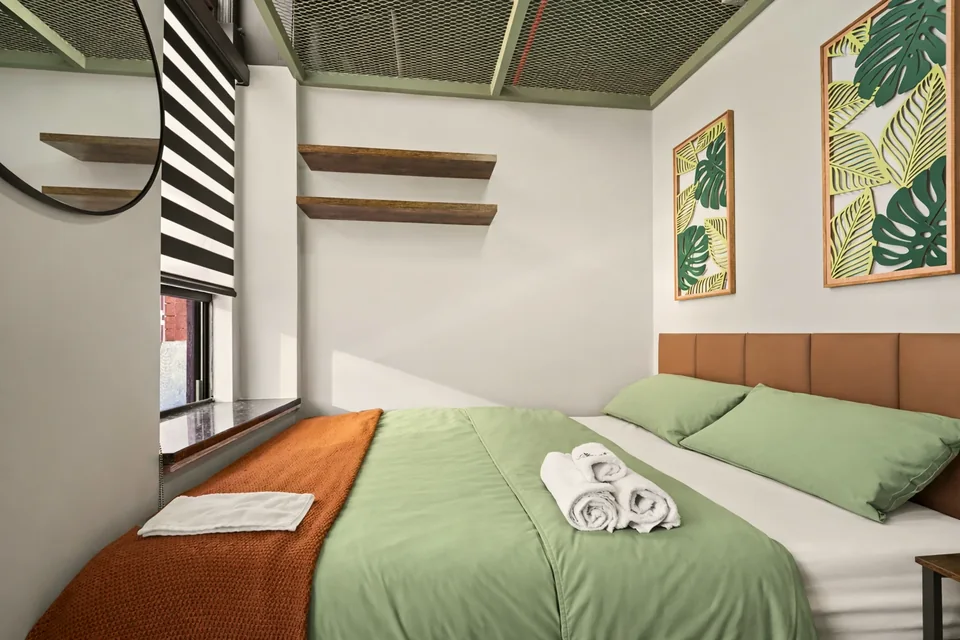
CityNest combines private rooms with different bed formats, bathroom arrangements, window conditions and ceiling designs. Those differences affect the stay. They need to be visible before payment and understood by everyone who handles a reservation or welcomes a guest.
The brief reached beyond a new website. It called for a common language across the product, the brand, the booking journey and the operation — with practical systems behind each promise.
pages · Brand bible
pages · Operating model
pages · Front desk playbook
room types · One clear product system
Let the guest choose with confidence.
Seven room types. Clear differences. A useful reason to choose each one.
The Nest collection became a coherent product system: Twin, Full, their Plus variants, Loft, Prime and Sky. The names connect to concrete features, rather than vague premium labels. Shared or private bathroom, bed size, window and ceiling condition are stated directly.
The website carries those distinctions into comparison cards, room details and a guided Nest Finder. It helps a guest narrow the options around the stay they want, then continue to booking.
A brand the whole hotel can use.
A 55-page brand bible brings positioning, language and visual decisions into the same system.
The brand work defines what CityNest stands for, who it serves and how it should sound. It connects product tiers and room descriptions to identity, typography, photography and digital applications.
The result is a working reference for the website, guest communication and future touchpoints. Clear rules make it easier to produce new material without losing the original idea or obscuring the room's real conditions.
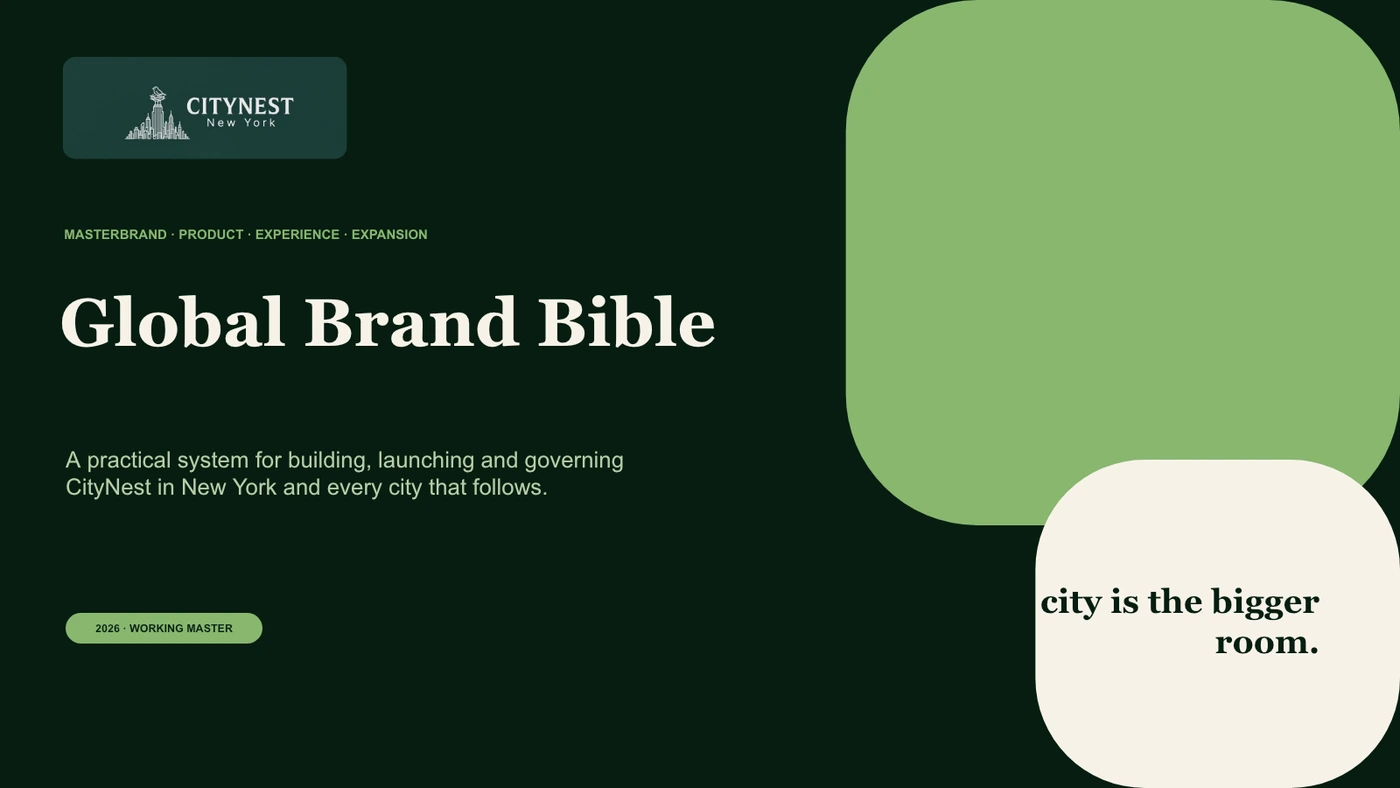
Selected preview · The 55-page CityNest Global Brand Bible.
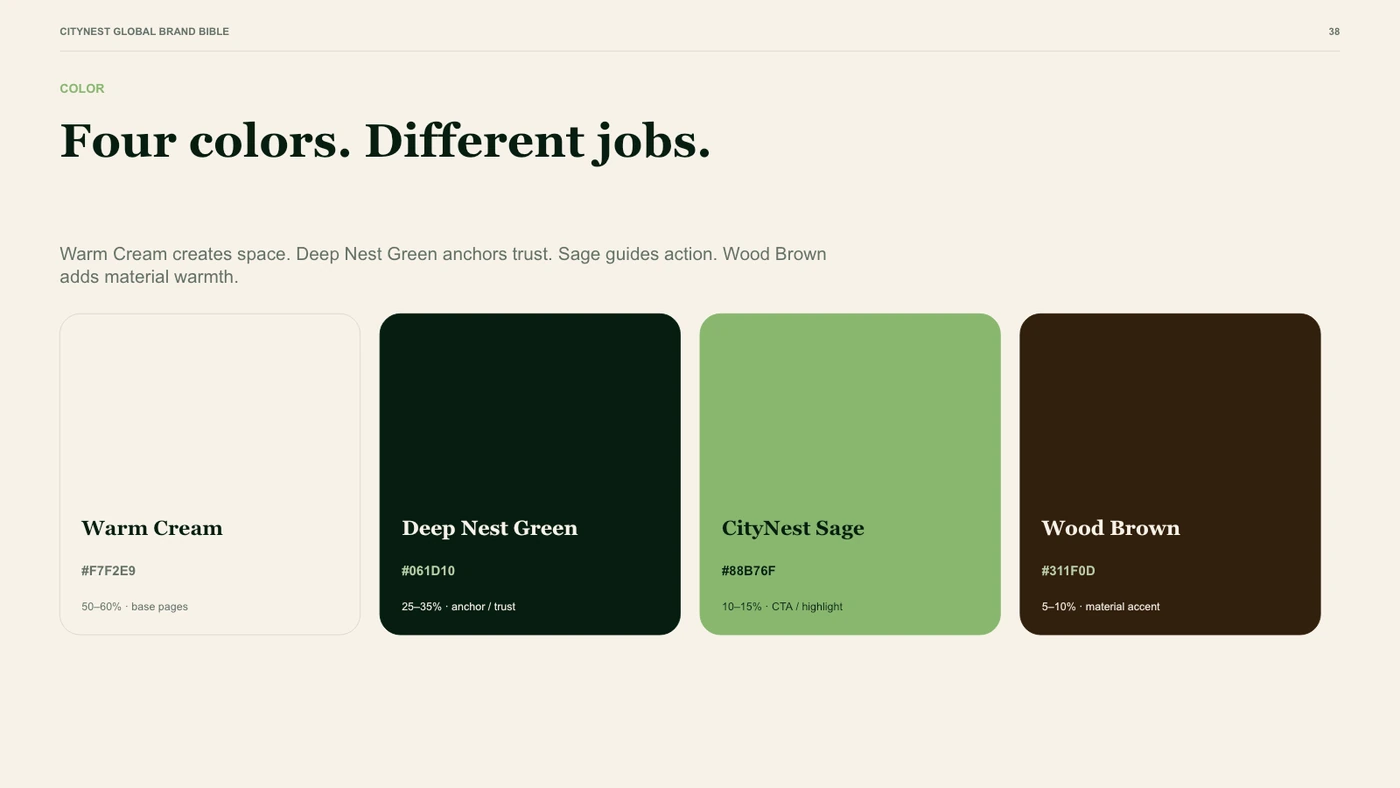
Selected preview · Consistent colour roles across guest touchpoints.
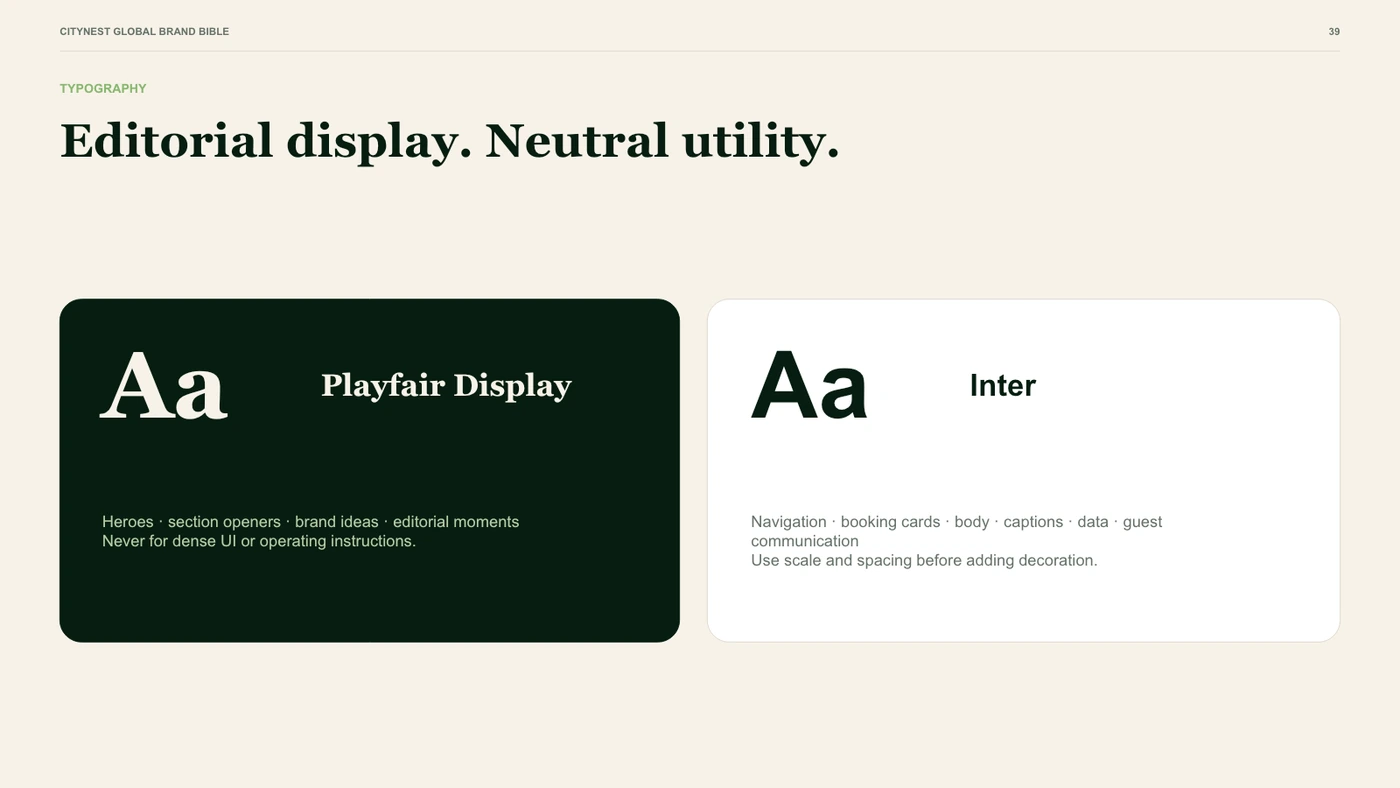
Selected preview · Typographic hierarchy and application guidance.
Give every loose end an owner.
Signal. Assign. Execute. Prove. Improve.
The 91-page operating model gives daily work a repeatable structure. A request or exception receives an owner, a priority and a next action. Completion has a record. Recurring problems return to management review.
Reservations, room readiness, housekeeping, payments and handovers are described within clear responsibilities. The framework also distinguishes the system of record from the people who must make a decision when a case falls outside the routine.
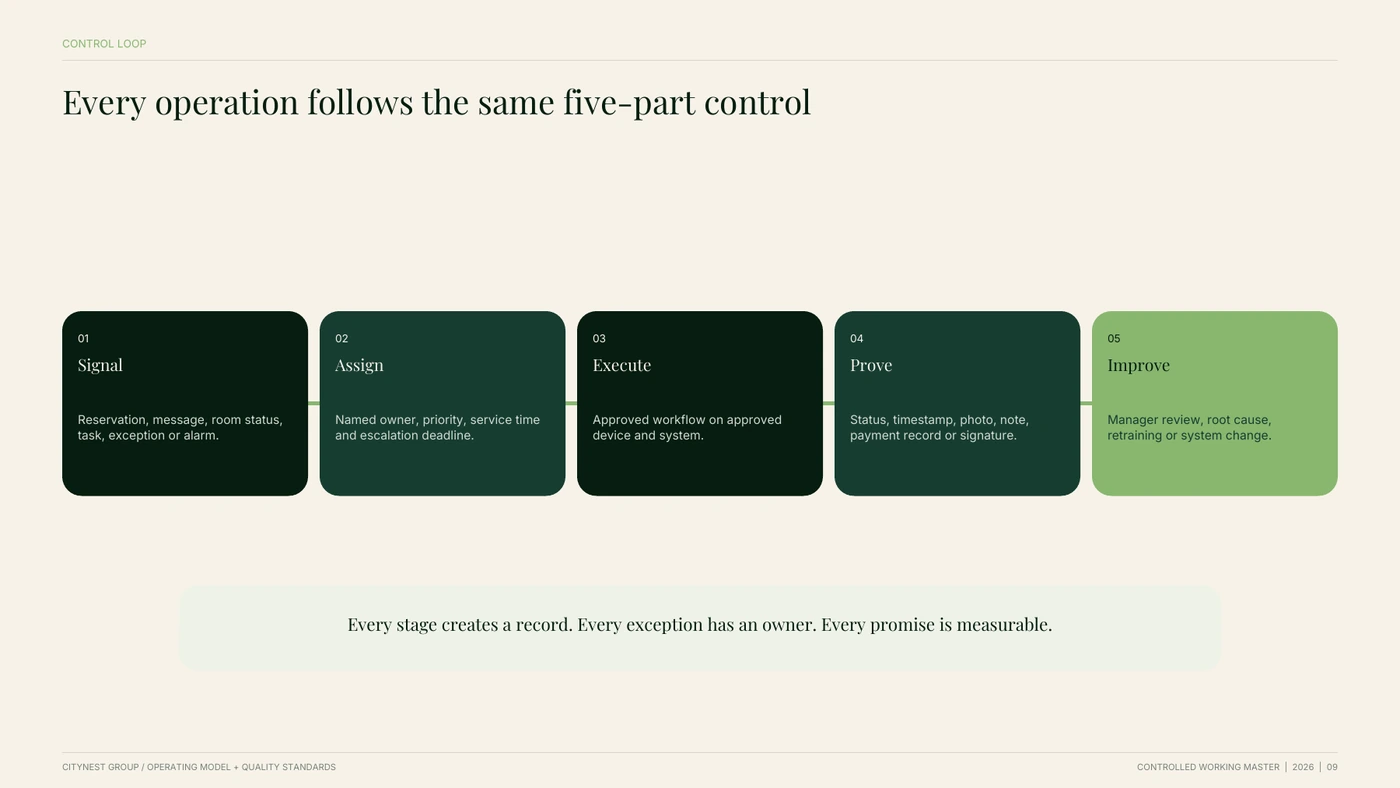
Selected page from the operating model · Ownership, execution and verification.
Make good service teachable.
Training should leave a team ready to work, with a clear path to independent responsibility.
The front desk playbook translates standards into procedures for reservations, arrivals, room coordination, service, payments and night audit. It is supported by a separate employee operations and training working master.
The training pathway moves from orientation and system learning to controlled practice, supervised shifts and competency sign-off. Role-specific responsibilities, evidence and escalation rules give the team more than a collection of instructions.
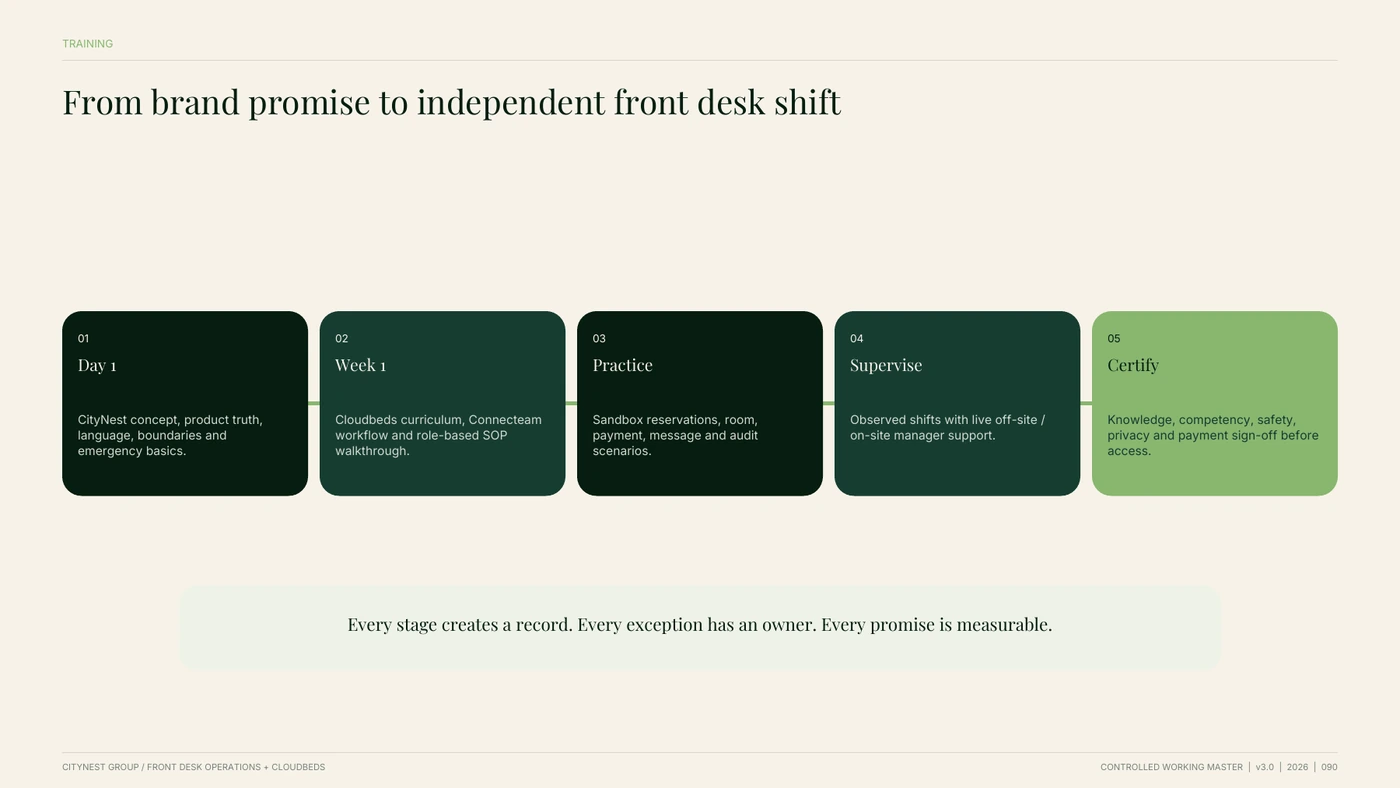
Selected training roadmap · From orientation to supervised practice and sign-off.
Carry the experience from first click to real help.
The guest-facing website connects room discovery, direct booking, local knowledge and communication.
The new site brings real room photography, a tailored date selector, product comparison and Cloudbeds booking into one guest journey. Dedicated location, offers, groups, concierge and careers pages give different visitors a useful next step.
Cloudbeds live chat and the concierge WhatsApp request builder create direct paths to the team. Analytics with consent preferences provide a foundation for understanding how visitors use the site, while keeping message and form contents out of website event reporting.
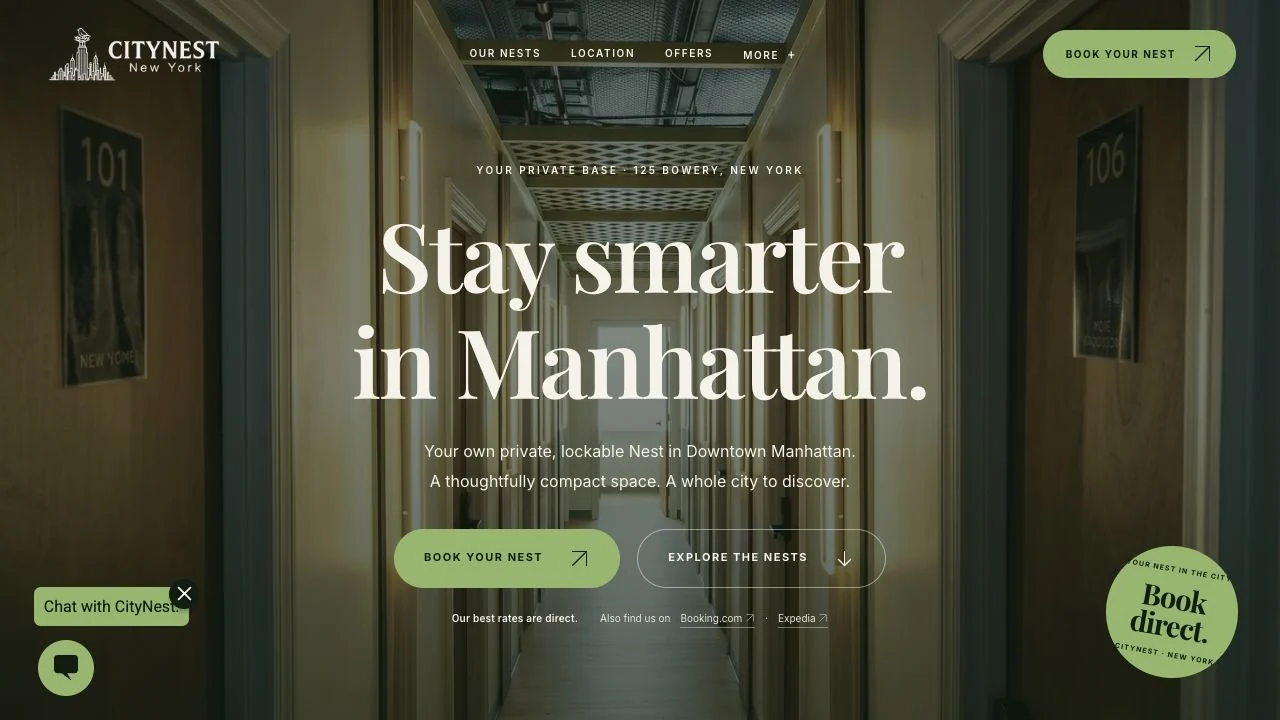
The published hotel website · Custom design, useful room choices and Cloudbeds integration.
A clearer room decision.
Room attributes, the Nest Finder, photographs and practical answers.
A connected booking journey.
Cloudbeds integration, dates, guests and direct booking paths.
A direct path to the team.
Guest portal access, live chat, concierge and useful local information.
Make pricing decisions explainable.
A useful rate strategy connects demand, the product and the real conditions of the booking.
The commercial work includes date-specific competitor research, room-category price planning and review of direct and third-party booking conditions. Bed, bathroom and window differences matter when choosing a relevant competitor set or setting an upgrade ladder.
The approach separates a proposed rate from a saved configuration and a booking click from a completed reservation. Commercial decisions need comparable inputs and a clear record of what was actually implemented.
What carries forward
A framework.
Built for real conditions.
The transferable work is the discipline: clear product information, accountable workflows, usable standards and a connected guest journey.
The next phase explores loyalty mechanics, deeper automation and guest tools. Each capability needs its own implementation and verification before it becomes a live guest promise.
Bring the same discipline
to your property.
Start with the gaps between your guest promise, your team and your systems. We will turn them into a practical scope of work.